Trying to choose between Midlothian and Mansfield for your next home in South DFW? You are not alone. Both offer strong value, steady growth, and easy highway access, but the day-to-day feel is different. In this guide, you will learn how each city stacks up on prices, commutes, lot sizes, amenities, and growth so you can move forward with confidence. Let’s dive in.
Quick orientation: where they differ
Location and vibe
Midlothian sits in southern DFW at the intersection of US‑287 and US‑67. It has evolved from a small town into a fast-growing suburban and industrial hub south of Dallas. You will see newer neighborhoods, open land, and a suburban-rural mix around the edges. For context, review the city’s location and background on the Midlothian overview page.
Mansfield sits north to northwest of Midlothian, with quick access to US‑287, I‑20, and State Highway 360. It is a larger, more built-out suburb with established neighborhoods, deeper retail, and quick routes into Arlington and the I‑20 corridor.
People and pace
According to Census QuickFacts, Midlothian has about 44,100 residents with a median household income of approximately 126,641 dollars and an owner-occupied rate around 79.7 percent. The mean commute time is about 31.7 minutes. You can explore the city snapshot on the Midlothian QuickFacts page.
Mansfield is larger at roughly 80,800 residents, with a median household income near 121,126 dollars and an owner-occupied rate of about 71.5 percent. The mean commute time is around 28.6 minutes. See Mansfield’s QuickFacts profile for details.
What this means for you: Mansfield’s larger population supports more retail and services inside the city. Midlothian’s higher owner-occupancy and active new construction reflect a strong suburban homeowner base and a newer housing profile.
Home prices and what you get
What the numbers say
Recent vendor snapshots place typical medians in a similar band for both cities. As of late 2025 and January 2026, Midlothian’s indicators generally fall around 440,000 to 525,000 dollars. Mansfield’s medians run roughly 430,000 to 520,000 dollars in the same period. Different sources track listing prices, sale prices, or smoothed value indexes, so medians vary by method and date. Always check current MLS data for up-to-the-week figures in your target neighborhoods.
What you get for the money
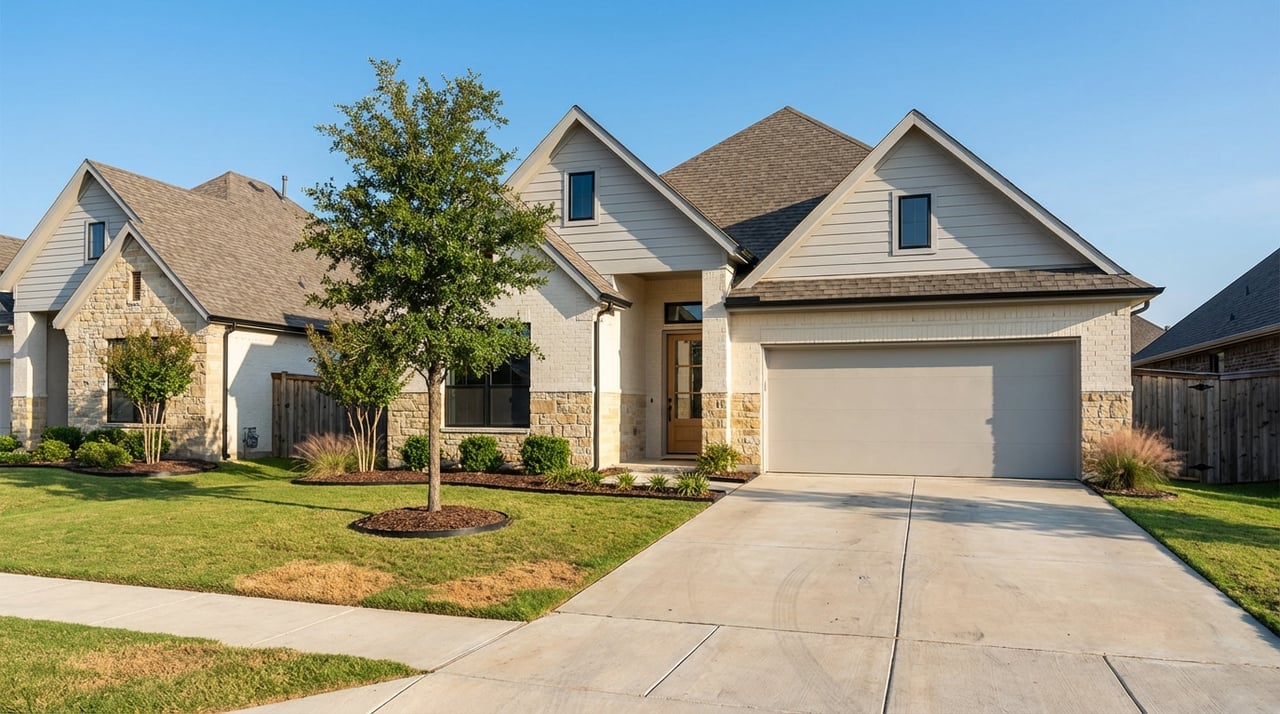
- Midlothian often delivers newer construction and larger lots. Quarter-acre and larger are common in many newer subdivisions and exurban pockets. This suits buyers who want more yard and a quieter streetscape.
- Mansfield offers a broader mix of established subdivisions, some infill options, townhomes in select areas, and master-planned neighborhoods. Inventory is often deeper, which can help if you have a specific floor plan or location need.
Bottom line: Prices overlap, but the product mix differs. If you lean toward larger yards and newer builds, Midlothian tends to fit. If you want more neighborhood variety and established amenities close by, Mansfield can be a strong match.
Market tempo and inventory
Days on market vary by source and neighborhood. Recent vendor snapshots for Midlothian have ranged broadly, while Mansfield often shows somewhat faster turnover. Expect master-planned sections along main corridors to trade faster than acreage or estate pockets in both cities. For a true read, pull neighborhood-level MLS comps and review days on market and months of supply in the exact subdivisions you are considering.
Commutes and connectivity
Key routes to watch
- Midlothian: US‑287 connects you toward Arlington and Fort Worth, while US‑67 takes you toward Dallas. Learn more about Midlothian’s geography and routes on the city overview page.
- Mansfield: US‑287, I‑20, and State Highway 360 offer multiple paths to jobs and events in Arlington, Grand Prairie, and beyond. The 360 Tollway in particular shortens some north-south trips. You can review the SH 360 corridor background for context.
Average commute times from Census estimates run about 31.7 minutes in Midlothian and 28.6 minutes in Mansfield. Your actual time will depend on your route, departure time, and whether you use tolled corridors.
Tolls and planning
If you plan to use SH‑360 or other tolled main lanes, factor in TollTag or ZipCash rates and trip frequency. Review pricing tools and route information on the NTTA planning page. During home tours, test your actual commute at rush hour on your likely route to see the real-time difference between the two cities.
Daily life: errands, healthcare, and fun
Retail and everyday errands
Mansfield’s larger population supports a wider array of big-box retail, grocery options, and entertainment within city limits. Midlothian’s options are growing along the highway corridors and in new centers, though some residents still make short drives to larger retail hubs for specialty shopping.
Healthcare access
Both cities offer convenient hospital access:
- Midlothian: Methodist Midlothian Medical Center provides local acute care and specialty services.
- Mansfield: Methodist Mansfield Medical Center and Texas Health Hospital Mansfield serve the city and surrounding suburbs. You can review area healthcare details on the City of Mansfield’s community page.
If proximity to a specific hospital or specialty clinic matters for your household, add drive-time checks to your showing plan.
Growth, industry, and local considerations
Midlothian’s industrial footprint
Midlothian has long hosted major cement plants and aggregates operations. In recent years, large-scale industrial and tech projects have joined the mix. Industrial corridors can influence truck traffic and land use in localized areas. If you are eyeing acreage or fringe neighborhoods, consider distance to industrial sites, HOA buffers, and prevailing wind patterns. You can read a general overview of Midlothian’s history and industrial base on the city’s page and explore public-interest context on cement production from national sources.
Infrastructure and land supply
The opening of the 360 Tollway shifted commute patterns and development in the southern metro corridor. Ongoing corridor improvements can affect where new neighborhoods emerge and how fast you can reach key job centers. For project timing and toll updates, check the SH‑360 corridor background and NTTA resources.
Who each suburb fits best
Shorter commute and broad amenities
If you need multiple route options and prefer more retail, dining, and medical services inside the city, Mansfield often comes out ahead. The combination of US‑287, I‑20, and SH‑360 creates more redundancy for work trips in Arlington, Grand Prairie, and the central DFW corridor.
More land and newer homes
If your top priorities are a newer home and a larger yard, Midlothian offers many choices. The tradeoff can be longer drives for some errands or employers, especially if your route relies less on toll options and more on US‑67 into Dallas. Pair your lot-size goals with a clear commute tolerance.
Value in the overlap
Because median prices overlap, the right pick often comes down to micro-location and daily routine. If school boundaries are part of your decision, review campus-level accountability reports and boundary maps before you lock in a neighborhood. For example, Midlothian ISD’s district accountability rating recently increased to 87 following a CCMR appeal, as noted in a district update. Always confirm the most current TEA reports and specific school zones for the property you are considering.
Smart next steps
- Pull live MLS comps for both cities and short-listed neighborhoods. Compare sale-to-list ratios and days on market.
- Test your commute at rush hour from two or three candidate neighborhoods in each city. Note whether you will rely on SH‑360 or tolled main lanes and price that into your monthly budget. Use NTTA tools for quick estimates.
- Tour at different times of day to understand traffic flow, construction, and retail activity.
- Review county appraisal data and tax rates for your target properties. For a statewide view on effective property taxes and tradeoffs, see the Tax Foundation’s Texas resources.
- Confirm school boundaries and campus accountability reports at the time you make an offer. Use official district and TEA sources.
- If you are considering acreage or outer-edge neighborhoods in Midlothian, review proximity to industrial corridors and any known buffers or mitigations.
If you want to compare neighborhoods, lot sizes, and commute scenarios side by side, our team can help you sort it out with clear data and on-the-ground insight. Ready to pinpoint your best fit in South DFW? Let’s talk about your next move with Krissy Mireles.
FAQs
What are typical home prices in Midlothian vs Mansfield in early 2026?
- Vendor snapshots for late 2025 to January 2026 show overlapping medians: Midlothian roughly 440,000 to 525,000 dollars and Mansfield about 430,000 to 520,000 dollars, depending on the data source and date.
How do commute times compare between the two cities?
- Census estimates show Midlothian’s mean travel time around 31.7 minutes and Mansfield’s around 28.6 minutes, but your actual time depends on route choice and whether you use tolled corridors like SH‑360.
Which city offers larger lots or newer homes?
- Midlothian commonly features newer construction and larger lots, including many quarter-acre or larger parcels in newer subdivisions and exurban areas.
Which city has broader shopping and dining options?
- Mansfield’s larger population supports a deeper retail and entertainment base within the city, while Midlothian’s options are growing along highway corridors with more in development.
Are hospitals nearby in both cities?
- Yes. Midlothian is served by Methodist Midlothian Medical Center, and Mansfield is served by Methodist Mansfield Medical Center and Texas Health Hospital Mansfield.
What should I know about toll roads in this area?
- SH‑360 provides a faster north-south option for Mansfield-area commuters, with rates that vary by TollTag or ZipCash. Use NTTA planning tools to estimate costs based on your routine.
Do industrial sites affect living in Midlothian?
- Industrial facilities are concentrated in specific corridors. If you are considering acreage or fringe neighborhoods, assess proximity, buffers, and prevailing winds, and factor that into your decision.
