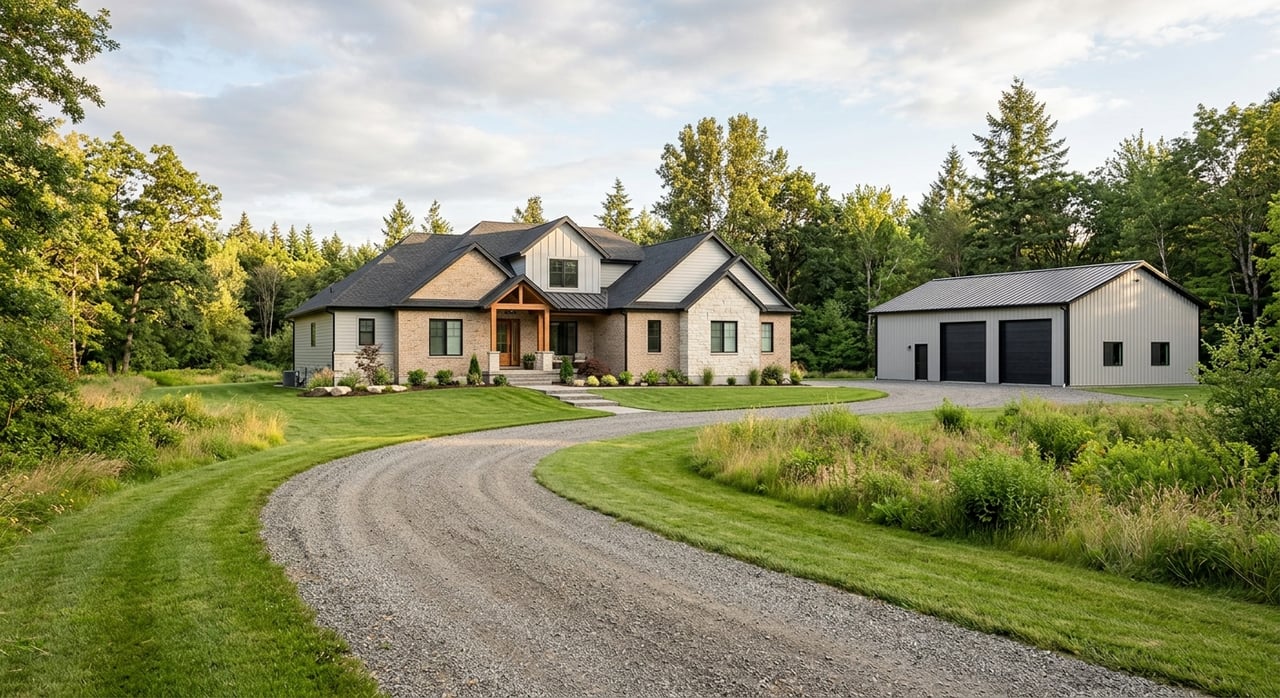
Are you dreaming about more elbow room, a workshop, or a few animals, but not sure what really changes when you trade a city lot for acreage near Red Oak? That move can be exciting, but it also comes with new responsibilities that many buyers do not fully see at first. If you are thinking about acreage living in Red Oak or nearby Ellis County, this guide will help you understand the practical differences so you can buy with confidence. Let’s dive in.
Why acreage living feels different
Moving from a standard neighborhood lot to a larger tract usually means you gain flexibility, but you may also take on more day-to-day property responsibility. On a typical lot inside Red Oak, city services can cover key basics like water, wastewater, garbage, and recycling.
Outside city limits, the setup can look very different. Ellis County states that it does not have the same zoning power cities have, and there is no formal county zoning classification comparable to city residential or commercial districts. That can create more freedom in some cases, but it can also mean nearby land uses may be less predictable.
Red Oak city living vs. county acreage
Inside Red Oak city limits, utility service is more straightforward in many neighborhoods. The city provides water through a line from Dallas Water Utilities, wastewater service is through the Trinity River Authority, and residential customers may receive city garbage and recycling service.
That does not mean city properties are hands-off. Red Oak notes that property owners are responsible for sewer service lines on their own property and for private-property sewer stoppages. Even in town, ownership still comes with maintenance obligations.
In unincorporated Ellis County, buyers often need to think more carefully about how the property functions. Utilities, drainage, access, fencing, and outbuildings become a much bigger part of the purchase decision. That is often the biggest mindset shift when you move from a city lot to acreage.
Utilities matter more on acreage
One of the first things to confirm is how the property handles water and wastewater. A larger tract may not connect to the same utility setup you are used to in town.
If the property is not on sewer, a septic system may be required. For many acreage buyers, this is one of the most important due diligence items because it affects build plans, costs, and long-term upkeep.
Septic systems and site planning
The Texas Commission on Environmental Quality says an on-site sewage facility must be designed from a site evaluation that accounts for local conditions. It also states that a permit and approved plan are required to construct, alter, repair, extend, or operate an OSSF.
Ellis County also requires septic permits. Its permit requirements include items such as soil analysis and system drawings, and aerobic systems require additional documentation like a filed affidavit and an initial maintenance contract.
That means a parcel that looks perfect on the surface may still need careful review before you move forward. Soil conditions and permit requirements can directly affect what is possible.
Private wells in Ellis County
If you are considering a property with a private well, or hope to drill one, you will want to verify the rules early. Ellis County is within the Prairielands Groundwater Conservation District.
The district states that new wells must be registered before drilling and that prior approval is required before drilling or operating a well. It also notes that a well generally needs a minimum tract size of two acres, though some smaller domestic, livestock, and poultry wells may be exempt from certain permitting requirements depending on use and capacity.
Access and drainage deserve a close look
A beautiful piece of land is only as practical as its access. On acreage, driveway placement, culverts, floodplain issues, and road maintenance can all affect your costs and your future plans.
Ellis County says permits are required for driveways and culverts to help with proper sizing and placement. If a tract includes or touches flood-prone areas, the county says floodplain construction may be possible with an elevation certificate, while floodway construction is not allowed.
Private roads also matter. In private subdivisions, Ellis County says there is no public maintenance of roads, drainage, or other infrastructure in the right-of-way. Those obligations fall to owners or an HOA, so it is smart to understand that responsibility before you buy.
Barns, shops, fences, and animals
Acreage buyers often picture a barn, a detached shop, extra storage, or room for animals. Near Red Oak, what you can do depends a lot on whether the property is inside city limits and what district applies.
Inside Red Oak, accessory structures are more regulated than many buyers expect. Detached accessory buildings generally must be in the rear yard, they must have a 60-foot setback from the front property line, unfinished metal materials are prohibited, and size limits vary by district and lot size.
For example, Red Oak caps barns and other accessory buildings at 1,400 square feet on lots under 1 acre and 3,000 square feet on lots from 1 acre to under 5 acres. Tracts of 5 acres and larger are governed by lot-coverage rules.
Animal allowances in Red Oak
If you want chickens, horses, or other animals, district rules are especially important. Red Oak’s RAE district allows animal husbandry subject to state health rules and sets a density limit of up to 10 fowl or 4 large animals per acre.
The city also notes that AG, RAE, and RE districts carry a 2,000-square-foot minimum living area for the main dwelling. In Red Oak, AG starts at 1 acre, while RAE begins at 32,670 square feet.
Fence rules buyers should know
Fence rules can shape how a property works for privacy, pets, and livestock. In Red Oak, fence height is capped at 8 feet.
The city also allows barbed wire on tracts 2 acres and larger and permits certain front-yard fence placement on lots of at least 1 acre or in agricultural and nonresidential settings. Material rules also vary based on where the property sits.
Choosing the right type of parcel
Not every buyer needs full acreage. In many cases, the best fit is the parcel type that gives you enough flexibility without adding more upkeep than you want.
Platted homesite
A platted homesite is often the easiest step up from a city lot. In Red Oak’s residential districts, minimum lot sizes range from 7,200 square feet in R-4 to 12,000 square feet in R-1.
For many buyers, that means a more manageable outdoor footprint and a more predictable municipal service package. If you want a little more space without a major lifestyle shift, this can be a strong option.
Small ranchette
A small ranchette can offer a nice middle ground. Red Oak’s RAE district begins at 32,670 square feet and includes a 40-foot front setback and 20-foot rear setback in the minimum residential requirements.
That setup may give you more room for fencing, a shop, or limited animal use without going all the way to a large rural tract. It is often a practical option for buyers who want breathing room but still want to stay close to town.
Larger parcel or AG land
A larger parcel usually offers the most flexibility for animals, storage, and future homestead-style plans. Red Oak’s AG district starts at 1 acre and requires a 150-foot minimum lot width.
The tradeoff is that larger acreage often asks more from you as an owner. Septic, wells, driveway access, drainage, fencing, and general upkeep can all become more involved.
A smart due diligence checklist
Before you buy acreage near Red Oak, it helps to ask the right questions early. Ellis County advises owners to contact Development before purchasing property, building new structures, remodeling, splitting or selling property, or installing septic.
The county also says many development permits require at least 1 acre of land and 150 feet of county or state road frontage. Permit applicants should be prepared with a deed and survey.
If you may want to divide the tract later, ask about platting at the beginning. Ellis County reviews plat applications separately and uses a monthly submittal calendar, so timing and feasibility matter.
Here are a few practical items to verify before you move forward:
- Whether the property is inside Red Oak city limits or in unincorporated Ellis County
- How water and wastewater service will work
- Whether septic permits, soil analysis, or system plans are needed
- Whether a well is allowed and what approval is required
- Driveway and culvert permit requirements
- Floodplain or floodway limitations
- Rules for barns, shops, sheds, and detached buildings
- Fence and animal regulations if those matter to your plans
- Private road, drainage, or HOA maintenance responsibilities
- Whether deed restrictions affect the way you want to use the property
Do not assume deed restrictions or tax status
Many buyers are surprised to learn that Ellis County says it does not enforce private deed restrictions. If a property is subject to restrictions, those are handled privately rather than by the county.
Tax treatment is another area where assumptions can cause problems. Ellis County directs owners with tax questions to the Ellis Central Appraisal District, and Texas special appraisal for agricultural or open-space land depends on qualifying land use and an application process, not acreage alone.
The Texas Comptroller says the land must have been devoted principally to agricultural use continuously for the preceding five years. Texas Parks and Wildlife notes that applications are filed through the county appraisal district.
Acreage can be a great move if you want more flexibility, more space, or a property that fits a different lifestyle. The key is understanding that more land often means more decisions, more planning, and more owner responsibility. When you know what to look for, you can choose a property that truly fits your goals instead of surprising you after closing.
If you are considering a move from a city lot to acreage near Red Oak, having local guidance can make the process much clearer. The Krissy Mireles team helps buyers navigate land, acreage, and custom-lot opportunities across Ellis County with honest advice and personalized support.
FAQs
What changes when you move from a city lot to acreage near Red Oak?
- You often gain more space and flexibility, but you may also take on more responsibility for utilities, septic, wells, drainage, fencing, access, and outbuildings.
What should buyers know about septic systems on acreage in Ellis County?
- Ellis County requires septic permits, and TCEQ states that an on-site sewage facility must be based on a site evaluation and approved plan before construction, repair, or operation.
What are the well rules for acreage property in Ellis County?
- The Prairielands Groundwater Conservation District states that new wells must be registered before drilling, prior approval is required before drilling or operating a well, and a well generally needs a minimum tract size of two acres.
What should buyers check about access on land near Red Oak?
- Buyers should verify driveway and culvert permit requirements, ask about private road maintenance, and review any floodplain or floodway limitations that could affect building plans.
Can you build a barn or shop on acreage near Red Oak?
- It depends on the property location and district. Ellis County requires permits for many structures in county areas, and Red Oak regulates accessory building placement, size, and materials inside city limits.
Can you keep animals on property in Red Oak?
- Red Oak’s AG and RAE districts address animal husbandry, and the exact allowance depends on the district, lot size, and the type of animals involved.
Does Ellis County enforce deed restrictions on acreage property?
- No. Ellis County says deed restrictions are private matters and are not enforced by the county.
Does acreage automatically qualify for agricultural tax treatment in Ellis County?
- No. Texas special appraisal depends on qualifying land use and an application process, not acreage alone, and the land generally must have been devoted principally to agricultural use for the preceding five years.
